Introduction: What Is Sciatica?
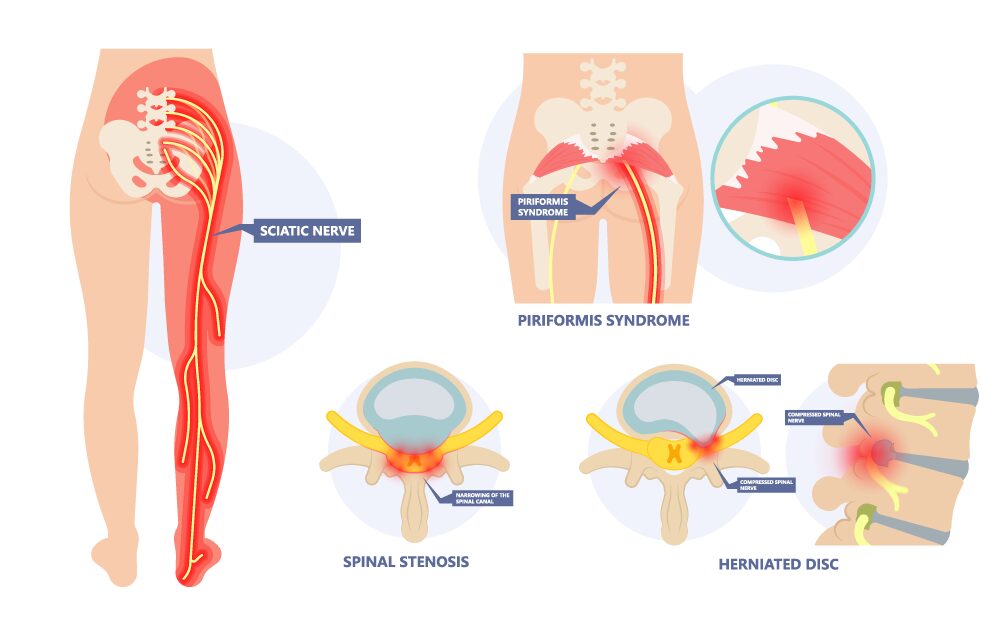
The sciatic nerve is the longest and thickest nerve in the human body. It starts from the lower back, passes under the buttock, goes through the hip area, and travels down into each leg.
Sciatica means that this nerve is being pressed or irritated. This can cause pain, burning, or tingling feelings in one leg, either the left or the right. The pain can be mild or very strong. It often becomes worse when sneezing, coughing, or sitting for a long time.
Sciatica itself is not a disease. It is a sign of a problem in the spine.
Understanding Sciatica
Diagnosing Sciatica: Symptoms, Causes, and Tests
Who Gets Sciatica and Why?
As people grow older, the soft cushions between the spine bones slowly wear out. This is a normal ageing process. In most cases, sciatica happens because one of these cushions moves out of place. This is often called a “slipped disc.” When this happens, it can press on the sciatic nerve.
The material inside the disc can also irritate the nerve and cause swelling, which increases pain.
Less common causes of sciatica include:
- Narrowing of the space where nerves pass in the spine
- Injury to the spine
- Infection affecting the spine
To find the cause, the doctor will ask about your symptoms and past health problems. A physical check and nerve examination will be done. If needed, the doctor may request tests such as X-rays, CT scans, or MRI scans.
Sometimes, patients are asked to mark the areas of pain on a body diagram to show where the pain travels.
Treatment Options for Sciatica: From Home Care to Surgery
Home Care and Pain Relief for Sciatica
Many people with sciatica start to feel better within about six weeks, even without special treatment.
During this time, symptoms can be reduced by:
- Taking simple pain relief medicines
- Staying active with gentle exercises
- Using hot or cold packs on the painful area
These steps can help control pain while the body heals.
Medical Treatment for Long-Lasting Sciatica
If pain continues for a longer time, the doctor may suggest:
- A guided exercise programme with a physiotherapist
- Injections near the spine to reduce pain and swelling
- Stronger pain medicines for short-term use
These treatments aim to reduce pain and help you return to normal activities.
When Surgery Is Needed for Sciatica
In rare situations, surgery may be required. This is usually done when severe pain does not improve or when nerve problems become serious. Surgery focuses on fixing the spinal problem that is pressing on the nerve.