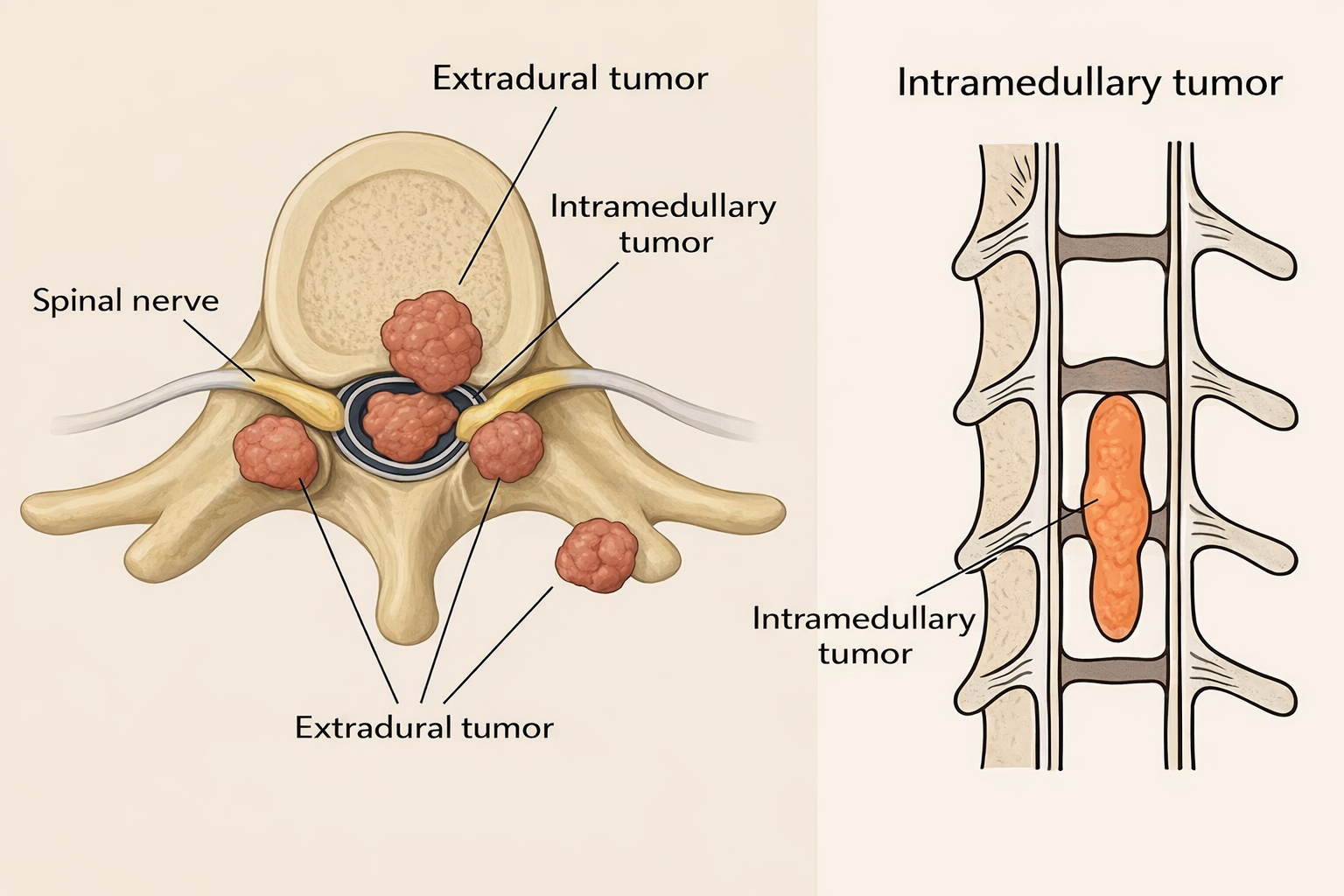
Introduction: Understanding Spinal Tumours
What Are Spinal Tumours?
The word “tumour” means swelling. A tumour is an abnormal growth in the body. Tumours can be non-cancerous (benign) or cancerous (malignant).
Benign tumours do not spread to other parts of the body. They usually grow slowly and are often harmless. Many benign tumours do not need treatment unless they cause pain, limit movement, or affect daily activities.
Malignant tumours grow faster and are more serious. They can spread to other organs such as the lungs, liver, or bones through the blood. When a tumour spreads from one part of the body to another, it is called a secondary tumour. These are common in the spine.
Types of Spinal Tumours and Where They Come From
Some tumours reach the spine through the blood. These include conditions like myeloma and lymphoma, which mainly affect the bone marrow and often involve the spine.
Other tumours may start directly in the spine, such as those growing from the nerves inside or around the spinal cord.
Who Gets Spinal Tumours and Why?
Tumours that begin only in the spine are very rare. Different types of tumours can affect different age groups.
More commonly, the spine is affected by tumours that spread from other organs. This usually happens in older adults, most often over the age of 55 or 60. Cancers that commonly spread to the spine include breast, prostate, and kidney cancer.
Diagnosis of Spinal Tumours: Symptoms, Signs, and Tests
Symptoms of Spinal Tumours
Spinal tumours often start with ongoing back pain that slowly gets worse. This pain is often more severe at night or when resting.
If the tumour presses on nerves or the spinal cord, it can cause pain in the arms or legs, weakness, or difficulty moving. In serious cases, it may even cause paralysis.
If a person already has cancer elsewhere in the body, doctors may suspect that new back pain could be due to spread to the spine and will arrange urgent tests.
Some tumours weaken the spinal bones and can cause a sudden fracture, leading to severe and sudden back pain.
Scans and Tests for Diagnosis
The main test used is an MRI scan, which shows the spine and nerves clearly. It helps doctors see how much pressure the tumour is putting on the spinal cord.
An X-ray or CT scan may also be used to look closely at the bones of the spine. These scans help confirm the problem and guide treatment planning.
In some cases, a small tissue sample (biopsy) is needed to find out exactly what type of tumour it is.
Treatment Options and Team-Based Care for Spinal Tumours
How Spinal Tumours Are Treated
Treatment depends on the type of tumour, how much it has spread, and the symptoms the patient has.
Care is best provided by a team that includes doctors, surgeons, radiation specialists, nurses, physiotherapists, and mental health support workers.
Benign tumours that do not cause pain or problems may only need regular check-ups. These usually have a very good outcome.
Cancerous and secondary tumours often need active treatment, which may include surgery and other therapies.
Role of Surgery in Treating Spinal Tumours
Surgery may be done from the front, the back, or both sides of the spine. The main aim of surgery is to make the spine stable and prevent it from collapsing.
This is often done using metal screws and rods to support the spine.
For tumours that start in the spine, removing the tumour is often important. For tumours that have spread from elsewhere, treatment such as medicine or radiation is usually used to control the tumour, and surgery focuses more on stability and pain relief.
After treatment, regular follow-up visits are very important to monitor recovery and overall health.