Introduction to Spondylolisthesis
Spondylolisthesis is a condition where one bone of the spine slowly moves forward over the bone below it.
Types of Spondylolisthesis
There are several types of this condition:
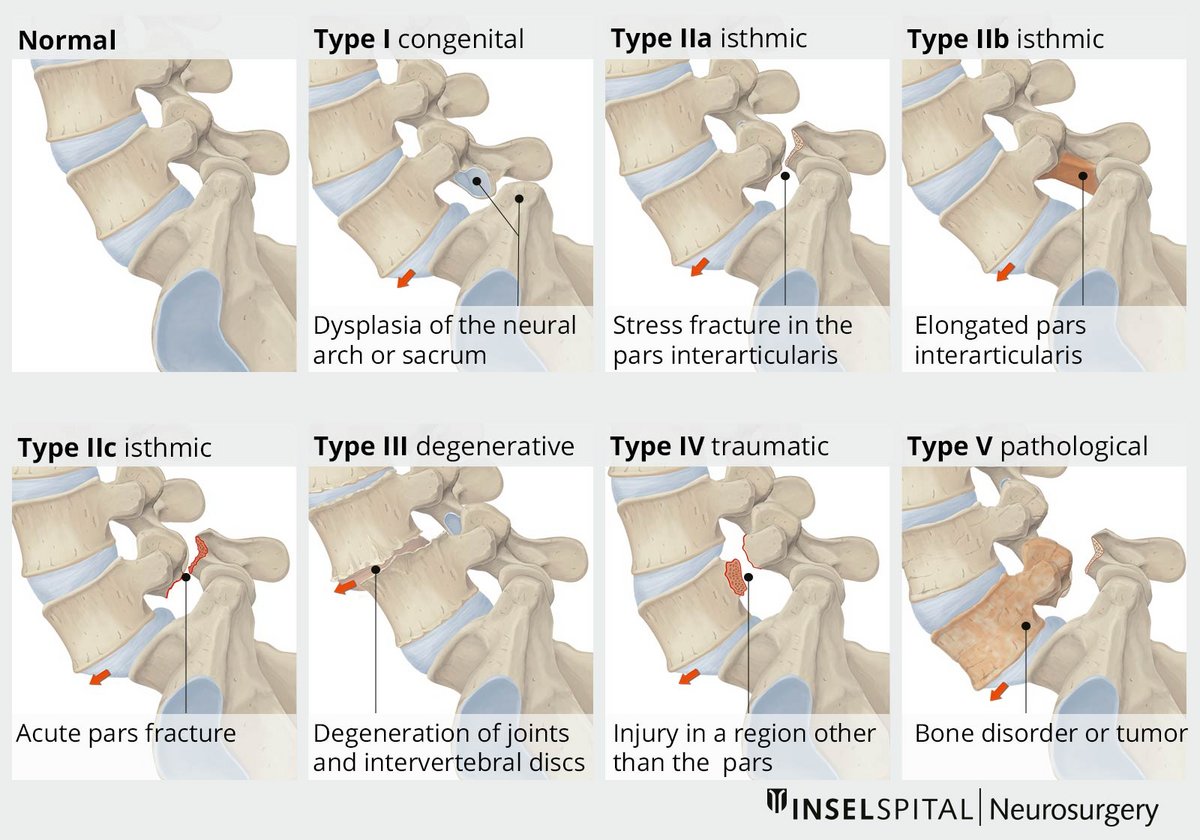
Age-Related (Degenerative) Spondylolisthesis
This type usually affects older adults. It develops as the joints of the spine slowly wear out over time. The joints become rough, the cushions between the bones become thinner, and the supporting tissues loosen. Because of this, one bone may slide forward.
This type is more common in women, people over the age of 50, and African Americans. When the bone slips, it can press on the nerves inside the spine, causing pain in the legs or buttocks.
Stress-Related (Isthmic) Spondylolisthesis
This type happens because of a weak or cracked part of the bone that connects the joints of the spine. It often begins during teenage years due to repeated stress on the spine. Many times, it settles without problems, but later in life the bone may slip more and cause leg pain.
Injury-Related (Traumatic) Spondylolisthesis
This type is uncommon and happens after a sudden injury that breaks part of the spine. One example is an injury high in the neck after an accident.
Birth-Related (Dysplastic) Spondylolisthesis
This type happens because of spine bones that did not form properly before birth. The shape of the bones makes slipping more likely.
Disease-Related (Pathologic) Spondylolisthesis
This type is caused by serious problems such as infection or cancer that weaken the bones of the spine.
Surgery-Related Spondylolisthesis
Sometimes, this condition can develop as a complication after spine surgery.
Common Areas and Symptoms
Spondylolisthesis most often occurs in the lower back. Many people have it without any pain at all. In fact, more than half of people with this condition do not know they have it.
Treatment is only needed if symptoms appear. In children who are still growing, doctors usually monitor the condition until growth is complete.
Degree of Slippage
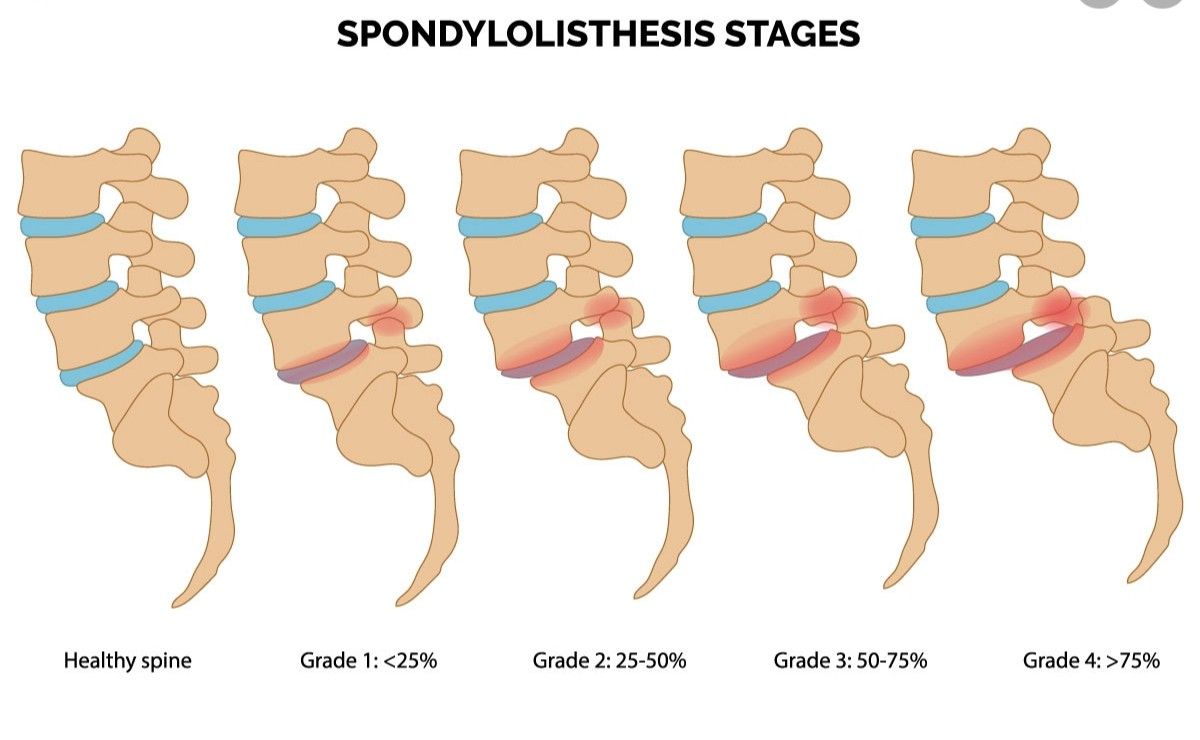
The amount of forward movement shows how severe the condition is. It is usually described as low-grade or high-grade slipping.
In general, more slipping means a higher chance of pain. In younger people, stress-related slipping can stretch the bone and pinch a nerve, causing pain down the leg. In older adults, age-related slipping often narrows the space for nerves inside the spine, causing leg pain while walking.
Both types can affect both sides of the spine, though sometimes one side hurts more. Other types are rare.
High-Grade vs Low-Grade Slipping
Severe slipping (grades 3 to 5) is much less common than mild slipping (grades 1 to 2). Mild slipping is usually related to aging or stress-related changes.
Connection with Spinal Narrowing
Age-related spondylolisthesis is closely linked to narrowing of the spine and is often discussed together with that condition.
Who Gets Spondylolisthesis?
About 4 to 8 out of 100 people have this condition. It is sometimes found by chance during scans done for other reasons.
Around half of the people with spondylolisthesis may feel back pain, sometimes with leg pain. It is seen more often in athletes and women and can also cause back pain in young people.
What Causes Spondylolisthesis?
Because it is seen more often in certain families, genders, and ethnic groups, doctors believe that genetics plays an important role.
Symptoms and Tests for Spondylolisthesis
Common Symptoms
- Pain in the lower back
- Pain spreading down the leg
- Tight muscles at the back of the thighs
- Changes in posture
- Sideways curve of the spine in some cases
Sometimes the bone not only moves forward but also shifts to the side.
X-ray Tests
X-rays are often done while standing. This helps doctors see how the spine lines up when upright and measure how much slipping has occurred.
MRI Scans
In younger people, doctors try to avoid X-rays when possible. MRI scans are preferred because they do not use radiation. These scans are usually done lying down, so the slipping may appear less obvious.
CT Scans
A CT scan may sometimes be requested by a specialist for more detail.
Treatment Options for Spondylolisthesis
Non-Surgical Treatment
If there are no symptoms, treatment may not be needed at all.
Staying generally fit is important. Gentle exercises and mixed activities can help as pain settles. Managing pain during flare-ups allows people to continue daily activities. Exercise often helps recovery.
Injection Treatment
In some cases, injections may help confirm whether the slipping is causing the pain.
Surgery for Spondylolisthesis
Surgery may be helpful for some people. It usually involves joining bones together using bone support to stop movement. If nerves are being pressed, space is created to reduce pain.
There are different types of operations, and the details should always be discussed carefully with a doctor.
Frequently Asked Questions